Blending Tradition with Modern Society: The Role of Ketamine-Assisted Therapy in 2026
There are many ways to approach psychedelic and ketamine-assisted therapy today. In many respects, we are profoundly removed from the traditional cultures that once used healing medicines within deeply relational, communal frameworks. Yet despite this separation, we are still left with the same timeless human longing: to heal suffering, reconnect to ourselves, and feel less alone.
The question then becomes: How do we honor the wisdom of the old while working within the realities of modern life?
How do we reconcile healing with mortgages, careers, parenting, schedules, and responsibilities? Not everyone has the privilege of stepping away for two weeks to attend a retreat, detach from daily obligations, and devote themselves entirely to transformation. Modern healing—and increasingly modern ketamine-assisted therapy—must account for the demands of contemporary life.
Over time, I have come to believe that our role as practitioners and participants in ketamine-assisted therapy is not to recreate the past exactly, but to thoughtfully integrate the best of both worlds—the wisdom of ancient healing traditions and the realities of modern life.
What Traditional Cultures Understood throughout history:
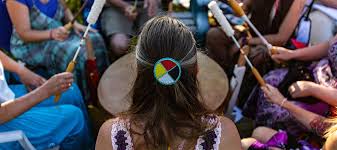
Many traditional cultures approached healing medicines within an ecosystem of relationship.Whether in Indigenous ceremonial traditions, communal rites of passage, or initiation practices across cultures, there was often an inherent social structure surrounding suffering and healing. People did not carry their wounds alone.
There were elders who knew your story. Family systems and communities that held grief collectively. Ceremonies that marked transitions in identity. Rituals that created meaning from suffering.
Healing was rarely isolated.
In many traditions, there was no separate concept of “preparation” or “integration” because those elements were naturally embedded into everyday life. Preparation happened through shared values, storytelling, mentorship, and communal expectations. Integration occurred organically because one returned to a community that helped metabolize the experience.
The medicine journey itself unfolded within a relational container—surrounded by trusted others, songs, ritual, witnessing, and belonging.
A young person moving into adulthood might undergo an initiation rite held by the tribe. A grieving community might gather in ceremony after loss. In Indigenous healing traditions, medicine was often used not merely for the individual, but in service of restoring balance within relationships and the broader community.
The healing was woven into culture itself.
No one had to manufacture safety.
The Modern Dilemma
Modern ketamine-assisted therapy often unfolds very differently than traditional medicine practices. Frequently, it occurs in isolation: an appointment, a treatment room, and then a return to everyday life. In some ways, this can unintentionally replicate the very conditions in which many wounds first emerged—aloneness, fear, disconnection, and the absence of attuned relationship.
We are often hurt in isolation, yet we frequently attempt to heal in isolation as well.
This is not simply a failure of modern medicine. It is also reflective of what contemporary life has conditioned us toward. Many people understandably want healing that fits within the constraints of their schedules and comfort zones. Community itself can feel foreign, vulnerable, or even threatening.
I have often encountered this dilemma firsthand.
At times, I have attempted to create more communal aspects within healing spaces—bringing people together to share, connect, or simply not feel alone in their experience. Yet I am often met with hesitation. Resistance. Discomfort.
And truthfully, I understand why.
When community is absent from culture, attempts to recreate it can sometimes feel forced. What once arose organically inside villages, tribes, or longstanding relational systems cannot simply be replicated overnight in a therapeutic setting.
In many ways, no matter how carefully we approach psychedelic work or ketamine-assisted therapy, there is inevitably an element of translating ancient traditions into a modern world that operates by entirely different rules.
Meeting People Where They Are
This leaves us with a dilemma—one I learned early in medical training: Meet people where they are.
In a perfect world, perhaps we would recreate the full communal containers of ancient healing practices. But even if we could, something essential might still be missing: authenticity. Healing spaces lose their potency when they become performative or imposed.
This may be one of the most important lessons for modern ketamine-assisted therapy in 2026: healing does not require perfectly recreating an ancient village. It requires creating conditions where people can safely experience themselves differently—often beginning with one authentic relationship at a time.
Instead, perhaps the task is humbler and more human.
We build healing one authentic relational experience at a time.
A trusted therapist.
A safe therapeutic relationship.
A partner who learns how to witness suffering differently.
A small group that feels genuine rather than manufactured.
A moment of vulnerability that was once impossible.
The goal is not perfection. The goal is enough.
Enough safety.
Enough authenticity.
Enough relationship.
The Timeless Ingredients of Healing
At its core, healing may not be as complicated as we make it.
Across both ancient tribes and modern therapy rooms, the deepest human needs appear remarkably unchanged.
We need:
Safety.
Authenticity.
Relationship.
Healing expands and contracts around these principles.
Whether through ceremony around a fire thousands of years ago or through ketamine-assisted therapy in a quiet room in 2026, the human organism seems to move toward healing under remarkably similar conditions: when suffering no longer has to be carried alone.
Perhaps this is the true bridge between tradition and modernity.
Not recreating the past exactly, but honoring its wisdom while adapting to the reality of the present moment.
Humans are beautifully adaptable. We always have been.
The external container may evolve, but the nervous system still longs for the same things it always has: to feel safe, to feel seen, and to heal in relationship.
If we can create even fragments of those conditions, the human organism has an extraordinary capacity to find its way back toward wholeness—even when the container looks nothing like it once did.
Michael Yasinski MD
Reach Out
We are here to support your healing journey with safe and compassionate care, helping you unlock new possibilities for growth and wellness.