What Do You See When You See Me?
I Don’t Need a Messiah: On Trauma, Spiritual Authority, and the Sacred Responsibility of Walking Beside One Another
What do you see when you see me?
It’s a question I’ve been sitting with lately.
Not because I need someone to recognize my accomplishments, understand my history, or validate the life I’ve created. But because I am increasingly aware of how quickly we assume we know another human being.
Especially in the world of healing and spirituality.
And perhaps most concerning to me, in the rapidly expanding world of psychedelic and plant medicine.
There is something extraordinary happening in these spaces. People are seeking connection, meaning, embodiment, and healing in ways that challenge many of the structures we’ve inherited. There is ancient wisdom, emerging science, and the possibility of profound transformation.
And yet, I find myself noticing something familiar.
The wolves are at my feet again.
The Difference Between Being Seen and Being Known
I was born into neglect.
Some of my earliest experiences of human connection were shaped by children who were themselves being sexually abused. I learned very young that touch could feel comforting and confusing at the same time. That being wanted could resemble being loved. That someone’s attachment to me didn’t necessarily mean they could truly see me.
I was the feral trailer park girl. The child other parents were hesitant to let their children play with, even as those same children seemed drawn to me with an intensity I didn’t understand.
As I grew older, I learned to offer my body in exchange for what felt like connection. I didn’t yet understand the difference between being desired and being respected, between attachment and love.
I wonder now how often I dissociated. How often my body responded while other parts of me were confused, disconnected, or simply trying to belong.
These are not easy things to revisit, but they matter. The patterns we develop in childhood don’t necessarily disappear when we become adults.
Sometimes they become more sophisticated.
Sometimes they become spiritual.
When Healing Recreates the Wound
I’ve spent much of my adult life studying trauma, attachment, the nervous system, and our extraordinary capacity to heal. I’ve learned that our need to belong can also be one of our greatest vulnerabilities.
When we long to be seen, we may mistake intensity for intimacy. When we seek safety, we may confuse certainty with wisdom. And when we’re searching for healing, we may place extraordinary authority in the hands of someone who appears to have found what we’re still seeking.
Sometimes the person offering guidance is searching, too. For significance, belonging, recognition, or reassurance that their own suffering has led them somewhere meaningful.
Healers are human beings, too.
But when a healer’s need to be needed becomes more important than another person’s autonomy, something shifts. Guidance becomes authority. Mentorship becomes dependency. Reverence becomes submission.
The healing relationship begins to resemble the very dynamics that brought someone there in the first place.
This matters to me not only as someone who has experienced trauma, but as someone entrusted with holding space for others.
I Don’t Need a Messiah
As I move more deeply into plant medicine and psychedelic healing, I’m encountering extraordinary people who carry profound knowledge, generosity, humility, and a genuine desire to serve.
I’m also encountering the guru.
Not necessarily someone who calls themselves one. Sometimes it’s the person who insists they aren’t a guru while quietly expecting to be treated like one.
The person who speaks of surrender but struggles to tolerate disagreement. Who speaks of ego dissolution while becoming increasingly identified with their spiritual importance. Who offers wisdom but has difficulty receiving it from someone they consider a student.
These dynamics aren’t exclusive to spiritual communities. They exist in psychotherapy, medicine, academia, families, and leadership. And they can exist in me.
Anyone who holds power in another person’s healing process has a responsibility to examine their relationship with that power.
So when someone approaches me with promises of wisdom or spiritual direction, I find myself wanting to say:
I don’t need a messiah.
I don’t need someone to interpret my soul or decide what my experiences mean. And I don’t need to surrender the wisdom of my own life in order to honor yours.
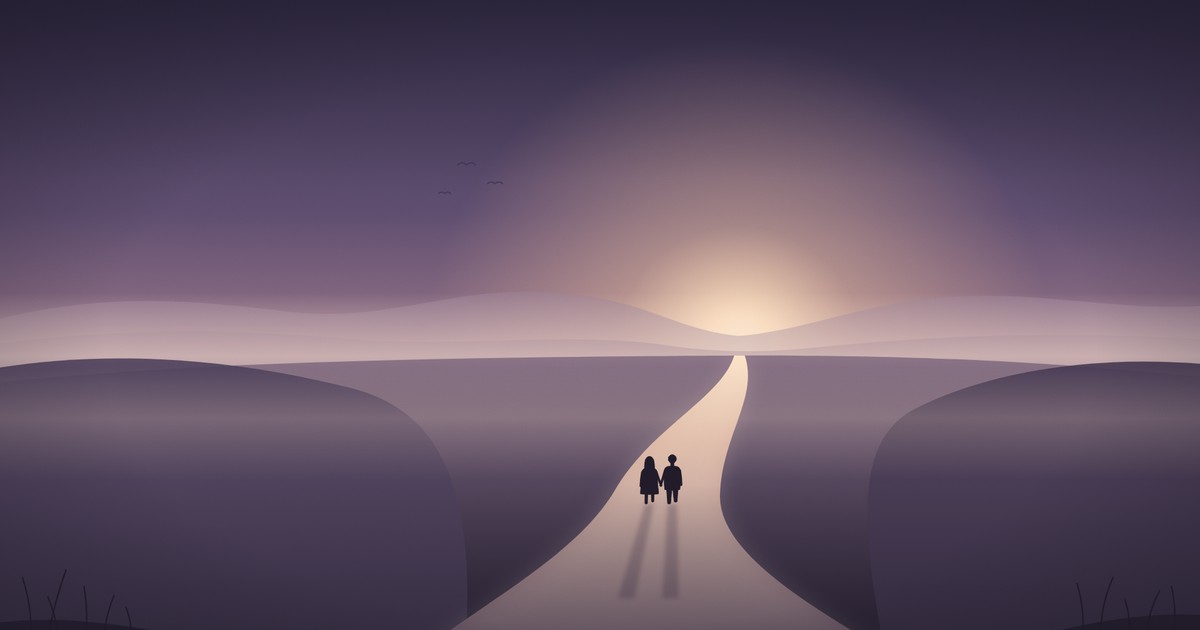
If you want to walk beside me, I welcome you.
Take my hand. Take my arm. Share what you’ve learned, help me see what I may not yet see, and allow me to offer you the same.
But if our relationship requires me to become smaller so that you can remain the authority, we won’t be walking together.
I’ve spent too much of my life learning the difference between connection and submission.
I’m not interested in confusing them again.
Surrender Without Self-Abandonment
Surrender is a word we hear often in psychedelic and spiritual communities.
Surrender to the medicine. To the experience. To the process.
I understand its importance. There are moments when our attempts to control or intellectualize an experience prevent us from encountering something meaningful.
I know this in my own body.
I’ve spent much of my life searching for answers, studying, training, analyzing, and trying to understand human suffering. I’ve also lived with the rigidity that can come from believing understanding will keep me safe.
There is something profoundly healing about softening, releasing control, and meeting what arises with curiosity rather than resistance.
But surrendering to an experience is not the same as surrendering our authority to another person.
A facilitator can invite. A teacher can offer. A guide can support.
A healthy healing relationship should strengthen our capacity to trust ourselves, not diminish it.
During a spiritual experience, Grandmother offered me something remarkably simple:
“Stop looking. Your eyes are sore.”
Those words continue to live in me.
Perhaps the next stage of healing isn’t another search for answers, teachers, or explanations. Perhaps it’s learning to recognize the wisdom already here, accumulated through living, through the body, through relationships, and through the painful work of returning to myself.
I don’t hear Grandmother’s message as an instruction to stop learning. I hear it as an invitation to stop searching for someone outside myself who can finally make me whole.
The Responsibility of Holding Space
I have spent years working with people whose earliest relationships taught them that love came with conditions, that safety required compliance, and that connection meant abandoning their own needs.
I think deeply about what it means to invite those same people into healing spaces where surrender, vulnerability, and trust are central to the process.
The responsibility is enormous.
Particularly in psychedelic work, where altered states can heighten suggestibility, intensify attachment, and create experiences that feel profoundly meaningful.
Good intentions alone don’t protect people from harm. Spiritual experiences don’t automatically create ethical maturity. Profound insight doesn’t necessarily translate into relational integrity.
This isn’t an argument against plant medicine or spiritual traditions. It’s an invitation to greater humility.
And those of us trained in Western psychotherapy and medicine must examine ourselves with the same rigor. Clinical credentials don’t automatically make us wise, and scientific knowledge doesn’t make us immune to ego.
We all have shadows.
Perhaps the most dangerous moment is when we become convinced we’ve transcended them.
Spiritual Bankruptcy
Sometimes I look around and feel as though spiritual bankruptcy is everywhere.
Not because people lack spirituality. Quite the opposite. There is an abundance of spiritual language, identities, experiences, and offerings.
But spiritual expansion and spiritual maturity are not necessarily the same thing.
We can pursue extraordinary experiences while avoiding ordinary accountability. Speak of transcendence while neglecting our relationships. Teach unity while creating hierarchies of enlightenment.
We can even use the language of healing to disguise our own unmet needs.
I recognize this possibility in the communities I encounter, and I recognize it in myself.
I don’t want to become someone who knows all the right words but has forgotten how to live them.
I want to remain human. Capable of making mistakes, being challenged, changing my mind, and recognizing when my own wounds influence how I show up for others.
I want to be surrounded by people who can do the same.
Discernment as a Sacred Practice
Discernment is becoming one of the most important practices in my life.
Not judgment. Not suspicion. Not the hypervigilance that once helped me survive.
Discernment.
The ability to remain open while listening to what my body, mind, relationships, and lived experience are telling me.
To recognize that not every invitation is mine to accept. Not every teacher is mine to follow. Not every powerful experience is inherently healing.
And to consider what is right not only for me, but for my family, my community, and the spiritual relationships that have accompanied me along the way.
I am learning that discernment doesn’t have to close my heart.
It may be what allows me to keep it open.
Walking Beside One Another
I sometimes think about the little girl I once was.
The feral child in the trailer park. The girl who confused attention with love. The young woman who left home at nineteen and barely looked back. The mother who struggled to leave a relationship because she loved her children more than anything. The woman who experienced betrayal and still found ways to create, connect, and trust again.
I think, too, about the spiritual guardians I’ve felt throughout my life. The sense that something accompanied me through circumstances I could not have navigated alone.
There were years when I could feel that presence clearly, and others, particularly when I began betraying myself, when I could no longer feel it.
I don’t pretend to understand all of that.
What I know is that I’ve spent a lifetime learning how to return to myself.
As I enter this new landscape of healing, I want to learn from Indigenous traditions with respect, humility, and reciprocity, without claiming ownership of knowledge that isn’t mine. I want to honor contemporary psychotherapy, medicine, and neuroscience without assuming Western frameworks are the only legitimate ways of understanding healing.
I want to help create spaces where different forms of wisdom can meet without one needing to dominate the other.
Where the person receiving care is not a passive recipient of someone else’s enlightenment.
Where the facilitator doesn’t become the center of the healing.
Where relationship matters more than hierarchy.
Where humility is practiced rather than performed.
And where we can hold one another’s hands without needing to hold power over one another.
What Do You See When You See Me?
So I return to the question.
What do you see when you see me?
The neglected child? The feral trailer park girl? The mother, the therapist, the healer, the spiritual seeker?
I am all of them, and more.
My life has been an extraordinary and complicated process of becoming. I can honor the wisdom that has emerged from my experiences without romanticizing the suffering that preceded it.
I’m still learning. Still healing. Still discovering places where I’m rigid, frightened, attached, or uncertain.
I’m willing to move through the deepest mud. To surrender to what life is teaching me. To be changed.
But I’m no longer willing to abandon myself in the name of healing.
I don’t need a messiah.
I need relationship, humility, and discernment.
I need people who understand that the sacred isn’t found in being above another human being.
Sometimes it’s found in the simple act of sitting beside them.
Perhaps that is the kind of healing community I want to help create. One where no one has to give themselves away in order to find themselves.
Reach Out
We are here to support your healing journey with safe and compassionate care, helping you unlock new possibilities for growth and wellness.