Scottsdale, Arizona
Who is a good candidate for ketamine therapy?
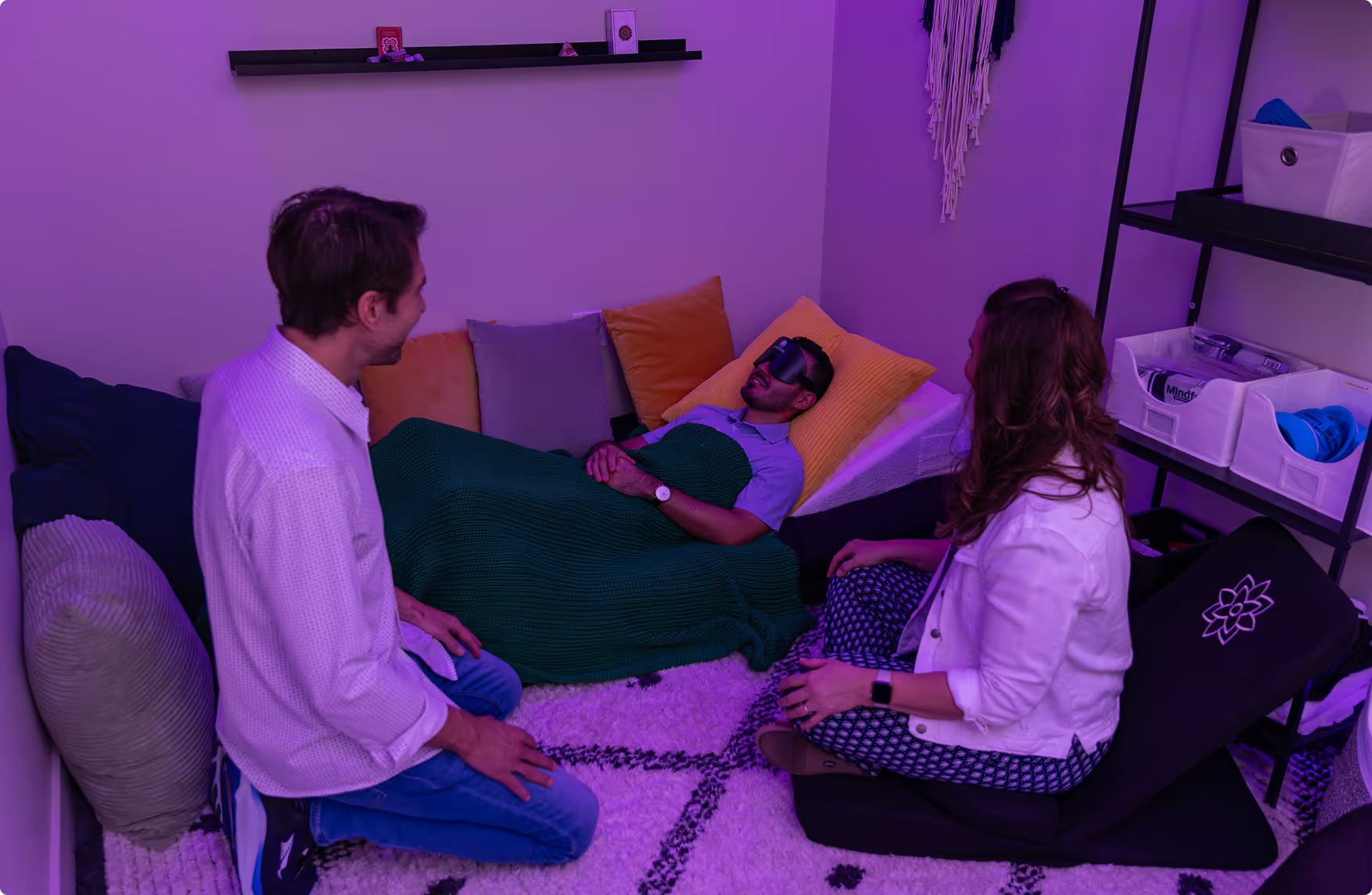
Before any session
 A psychiatric assessment comes first
- Preparation before the medicine
- A therapist stays with you throughout
- Adults 18+
Who it tends to help
Who is a good candidate for ketamine therapy
Most clinics ask whether you qualify.
We’re more interested in whether you’re ready.
Clarifying intentions
Exploring emotional patterns
Understanding protective strategies
Addressing fears with compassion
Learning grounding and nervous system regulation skills
Readiness
Readiness matters as much as diagnosis
WHO MAY NOT BE
Who is not a good candidate for ketamine therapy
Your current concerns
Your medical and psychiatric history
What you've already tried
What did or didn't help
18+
We work with adults 18 and older. And some conditions, including bipolar disorder, OCD and psychosis, we treat through psychiatric care rather than ketamine-assisted psychotherapy.
The dissociation people live with as a trauma response and the dissociation ketamine produces are different things that share a name. Our clinicians work with that distinction directly.
How we work with dissociation →
The assessment isn’t a gate to get past. It’s the first part of the care.
Is ketamine therapy safe?

Elsewhere, the prescriber who screens you and the therapist who does the deeper work rarely talk. Here the assessment, the medicine sessions and the therapy happen inside one team trained in trauma treatment.
Questions
What people ask before their assessment
If something you need to know isn't here, call and ask. We would rather answer it now than have you wonder.
That's decided individually by a psychiatric assessment rather than a checklist. At our practice, we work only with adults 18 and older, and some conditions, including bipolar disorder, OCD and psychosis, are treated through psychiatric care rather than ketamine-assisted psychotherapy.
Usually an adult whose symptoms keep affecting their relationships, work or sense of self after traditional treatment hasn't been enough, and who is ready to take part in preparation and integration. A psychiatric assessment confirms whether it's appropriate and medically safe.
Dissociation doesn't automatically rule you out. The dissociation people experience as a trauma response and the dissociation ketamine produces are different things that share a name. Your assessment looks at your whole picture, and a clinician stays with you for the full session.
Ketamine is a controlled substance with a known potential for misuse. In ketamine-assisted psychotherapy here, every session happens with a licensed psychiatric provider present, after a psychiatric assessment has confirmed treatment is appropriate for you.
Not necessarily. Your current medications are reviewed as part of the psychiatric assessment, and any change is a clinical decision made with you rather than a precondition for treatment.