Scottsdale, Arizona
Trauma psychiatry that treats the whole nervous system.
.png)
Our approach
What Trauma-Informed Psychiatry Means Here
The phrase gets used loosely. Here it means something specific.
Every clinician is trained in Somatic Experiencing®, a body-based approach to working with trauma and chronic stress. Dr. Michael Yasinski also works with Deep Brain Reorienting (DBR), which attends to the orienting response in the brainstem, the split second where the body registers threat before the mind has turned it into a story.
These are not techniques layered on top of psychiatry.
They are how the psychiatry is practiced.
We do not treat a diagnosis as a fixed label. A symptom carries information about what your system needed at the time it learned to respond that way. We would rather understand it than suppress it.

Michael Yasinski, MD, SEP

Lindsey Dunning, PMHNP
Services
Evaluations and Medication Management
Psychiatric Evaluations
Medication Management
Who we help
Working with PTSD and Complex Trauma
Trauma is not only the event. It is what the nervous system does afterward, sometimes for years. The hypervigilance. The numbness. The sense that some part of you is still braced for something that already happened.
We work with acute PTSD, and we work with the slower kind that accumulates from childhood, from chronic stress, or from relationships where safety was unreliable. Both respond better to care that treats the body as part of the picture rather than as a separate department.
Complex Trauma and PTSD
Treatment-Resistant Depression
Anxiety and Chronic Stress
OCD
Bipolar Disorder
POTS and Autoimmune Dysfunction
Psychosis and Schizophrenia
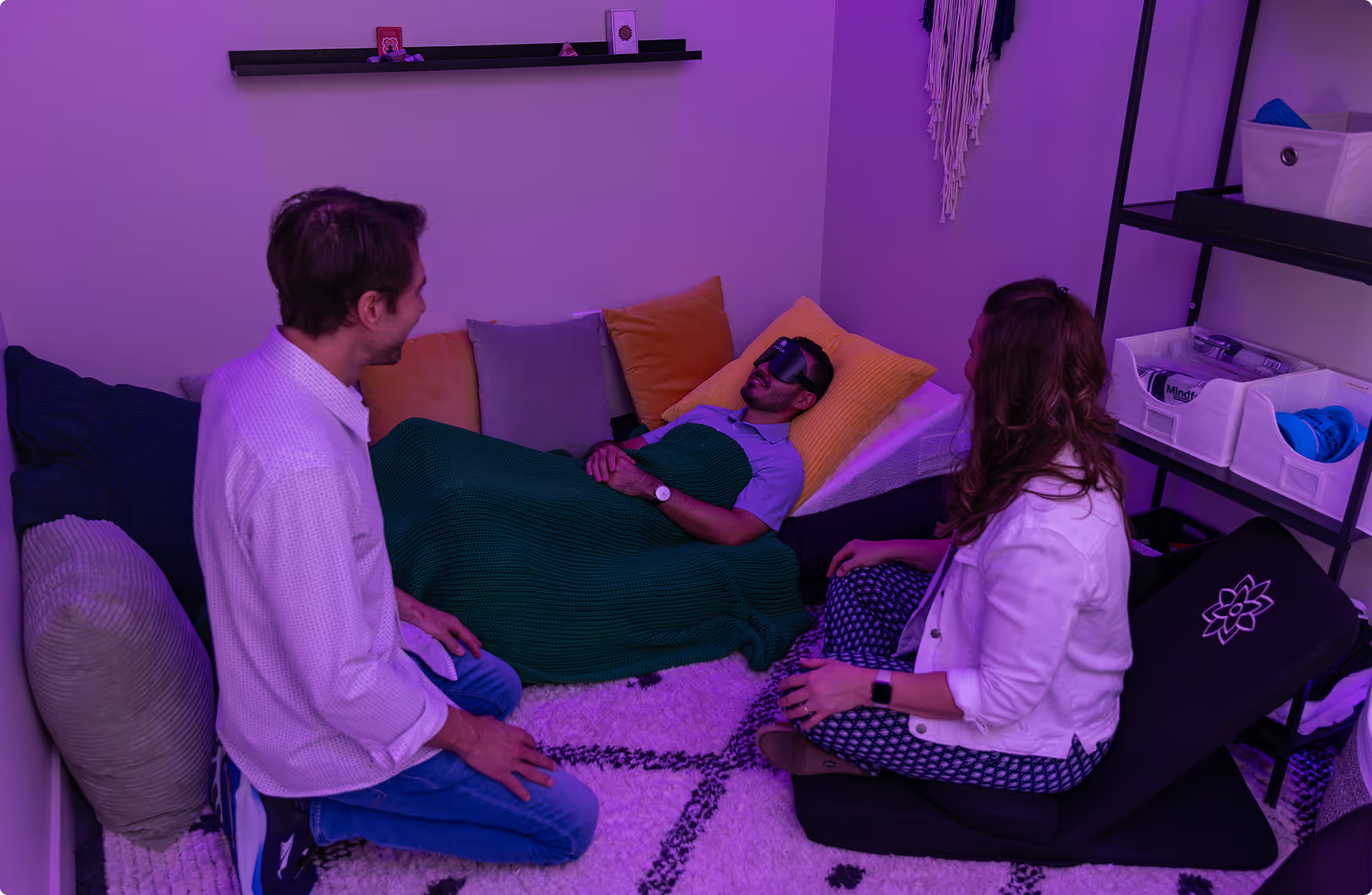
Ketamine Psychotherapy
Working with PTSD and Complex Trauma
We work with acute PTSD, and we work with the slower kind that accumulates from childhood, from chronic stress, or from relationships where safety was unreliable. Both respond better to care that treats the body as part of the picture rather than as a separate department.
Ketamine used for depression, PTSD, anxiety, OCD and bipolar disorder is an off-label treatment. It is not FDA approved for those conditions and it is not right for everyone.
Explore Ketamine-Assisted PsychotherapyQuestions
What People Ask Us First
If something you need to know isn't here, call and ask. We would rather answer it now than have you wonder.
We are a private pay practice, which means we are not in network with insurance plans, including Medicare, Medicaid and AHCCCS. If your plan has out-of-network benefits, we can provide a superbill on request that you can submit to your carrier. Reimbursement depends on your plan and is not guaranteed.
Session type, length and cost vary by provider and service. A 30-minute medication management visit is $175, and a longer psychiatric session runs $300 to $400. You can request a Good Faith Estimate of your expected costs before scheduling.
For psychiatric care, yes. We collaborate with outside therapy teams regularly, and it is one of the reasons people come to us. Ketamine-assisted psychotherapy works differently. The therapy inside a KAP session is held by one of our clinicians, so that part of the work happens here. We will still collaborate with your therapist alongside it.
No. We work with individuals 18 and older.
We ask for at least 24 hours' notice. Cancellations inside that window are charged the full session fee, because the appointment time is held for you.
Reach out
To ask a question or book an evaluation, call us. You can also email info@traumahealingjourneys.com.
Call Us (602) 842-9919