
Scottsdale, Arizona

Anxiety treatment for a body that won't stand down.

You know the worry is out of proportion. Knowing doesn't help.
A chest that tightens before anything happens. Scanning every room you walk into. Sleep that arrives late and leaves early.
That isn't you being dramatic. It's a system that learned to stay ready and never got the signal to stop.
Modern living room with a blue sofa, decorative pillows, abstract wall art, wooden side table, floor lamp, and a desk with a swivel chair by a window.
Regulation alongside medication
Coordinates with your therapist
Trauma-informed clinicians
Adults 18+

WHO WE SEE

Anxiety that has outlasted the explanation

Living in constant worry, overwhelm, or hypervigilance leaves the nervous system exhausted.
Some people arrive with a diagnosis. Others have managed it so long they call it a personality trait rather than a condition.
What they share: they can trace the pattern and list the triggers. The body carries on regardless.
That gap deserves to be taken seriously, not treated as a failure of effort. Where anxiety has a strong physical component, approaches that work mainly through thought have further to travel.
The insight arrived.
The symptoms stayed.
Often shows up as
Generalized anxiety
Panic
Social anxiety
Social anxiety
Burnout

Our approach

Working with the body, not only the thoughts

Most anxiety care works on thoughts. We start with the system underneath. Every clinician here is trained in Somatic Experiencing®, a body-based approach to trauma and chronic stress. Dr. Michael Yasinski also works with Deep Brain Reorienting, which attends to the orienting response in the brainstem: the moment the body registers threat, before the mind makes a story out of it.
Most places
Two offices
A prescriber for the medication, a therapist for the pattern, and very little traffic between them.
Here
One conversation
Somatics, Internal Family Systems, attachment repair, and Deep Brain Reorienting sit in the same treatment plan as psychiatric assessment and medication, held by clinicians trained in both.
When anxiety turns out to be sitting on top of something older, that's where we start.

CHRONIC STRESS

When the body responds to danger that has passed

Sometimes a system keeps acting as though a threat is still present, long after life has changed. Alertness that once made sense becomes the default, and the bill arrives as exhaustion, tension, broken sleep, or a digestive system that never quite settles.

Through somatic work and, where appropriate, ketamine-assisted psychotherapy with thoughtful integration, we help people move toward regulation and a renewed sense of safety.
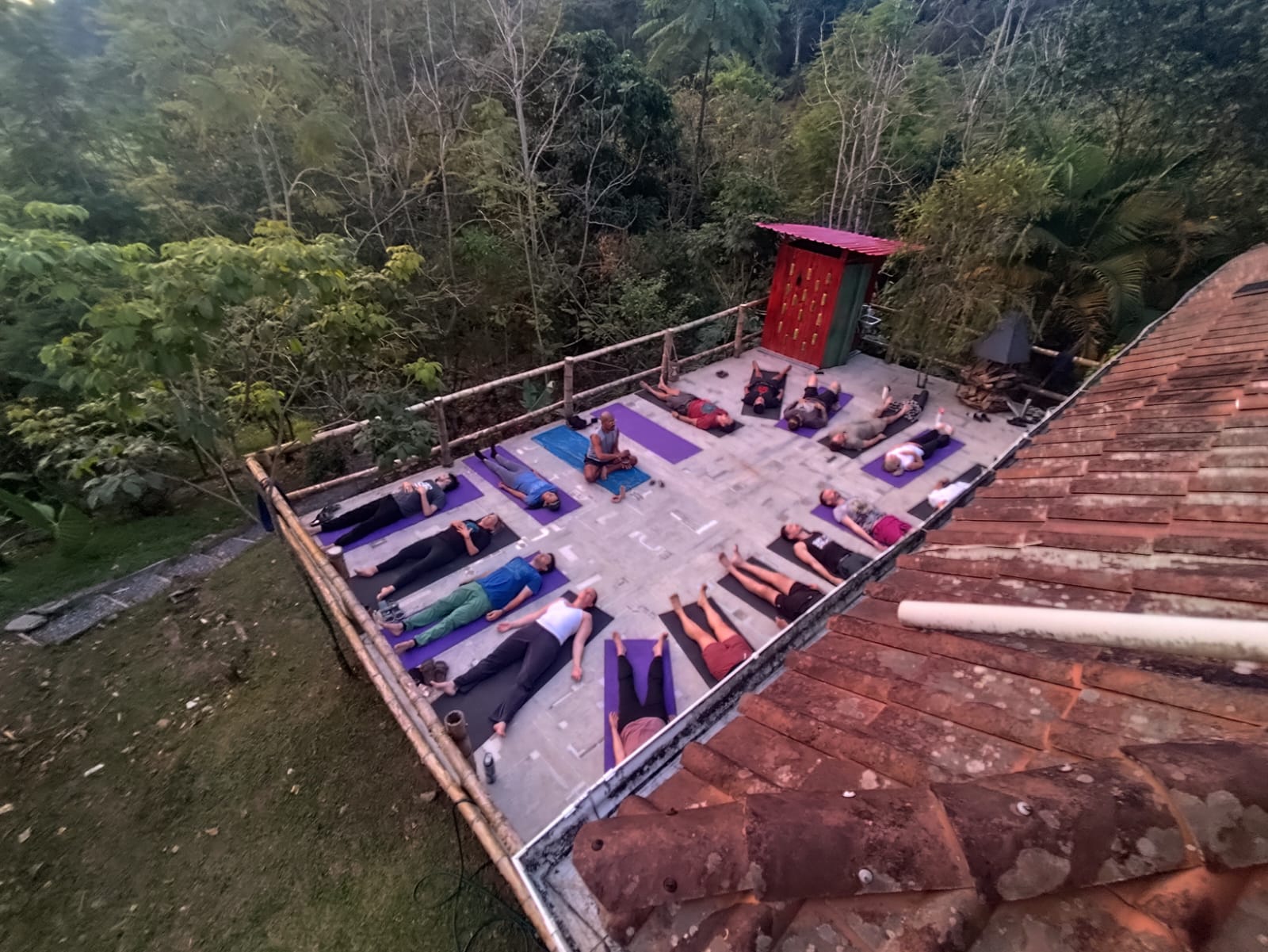
The goal isn't constant calm. It's a nervous system that can come back down.

WHAT TO EXPECT

What working with us involves

Psychiatric evaluation
Care begins with a full psychiatric evaluation: your current concerns, your history, what you have tried, and what did or didn't help.
We also look at
  • Sleep
  • Nutrition
  • Caffeine, alcohol, and anything else already being used to manage it
  • The stress you carry now, and what taught your system to respond this way
Keep your therapist
Many people who come to us already have a therapist. For psychiatric care, we collaborate with outside therapy teams regularly.
It is one of the reasons people come here.
If ketamine becomes part of the plan
A psychiatric assessment first determines whether it is appropriate and medically safe.
Preparation comes before any medicine session, a licensed psychiatric provider stays with you throughout, and integration continues afterward.

KETAMINE AND ANXIETY

Ketamine for anxiety and chronic stress

Ketamine can soften long-held defenses and open a period of psychological flexibility. For anxiety that has run for years, that window can make room for a different relationship with the patterns underneath, particularly where anxiety connects to earlier experience.
It is one option among several here, not the default. Plenty of the people we treat for anxiety never have a ketamine session.
Explore Ketamine-Assisted Psychotherapy

Questions

What People Ask Us First

If something you need to know isn’t here, call and ask. It’s our job to get you answers.

I have already done CBT. Is there anything else?

Often, yes. Approaches that work through thought and approaches that work through the body address different parts of the same problem, and having done one does not exhaust the options. What we add is attention to what the nervous system is doing underneath the thinking.

Can you work with the therapist I already have?

For psychiatric care, yes, and we do it often. For ketamine-assisted psychotherapy, no. The therapy inside a KAP session is held by one of our clinicians, so that part of the work happens here. Your own therapist stays in the picture, and we coordinate with them alongside it.

Do I have to take medication?

No. Medication is one tool, and it is discussed rather than assumed. Some people work with us without any prescription at all, and others use one for a period and then taper off with support.

Do you treat panic attacks?

Yes, as part of anxiety care. Panic is usually a nervous system doing something very fast, which is exactly the territory a regulation-focused approach is built for.

Do you see children or teenagers?

No. We work with individuals 18 and older.

Reach out

Wherever you are, a conversation is the best place to start.
To ask a question or book an evaluation, call us. You can also email info@traumahealingjourneys.com.
Call Us (602) 842-9919
We do not provide emergency psychiatric services. If you are in crisis, call the Arizona Crisis Hotline at 1-844-534-4673, dial 911, or go to your nearest emergency room.